
Given that they were born well after the dial-up buzz of the ’90s and the glittery excesses of the ’00s, Gen Alpha kids are making entertainment choices that exhibit a surprising amount of familiarity and fondness for times they’ve never experienced first-hand.
The Insights Family recently looked at this burgeoning trend more closely in survey data of three- to 15-year-olds in the US, the UK and Australia collected in Q1 2025. And our findings have identified some interesting creative and commercial opportunities for the kids content industry to tap into.
What came through loud and clear is that kids in this age bracket are forming strong emotional bonds with entertainment that predates their birth. Scooby-Doo, Power Rangers, SpongeBob SquarePants (pictured), Star Wars, Harry Potter and Transformers are just a few examples of currently popular entertainment brands that originated well before the Gen Alpha generation began in 2010.
And while Millennial parents do often introduce retro content into family life, our data reveals that kids are also actively discovering it themselves—especially on social platforms like YouTube, TikTok and Instagram Reels.
Diving deeper into this from a TV standpoint, many of the most popular shows among kids in Q1 2025 hail from earlier times, including The Simpsons (1989), Pokémon (1997), SpongeBob SquarePants (1999), Dora the Explorer (2000) and Ben 10 (2005). Some have been rebooted or refreshed, including Ben 10 with multiple story arcs and Pokémon with evolving characters. But others, like The Simpsons and Tom and Jerry, remain virtually unchanged, proving that distinctive or relatable characters and well-written humor can be timeless in their appeal.
The same pattern shows up in feature films. Three- to eight-year-olds continue to love classic franchises such as Spider-Man (1959), The Lion King (1994) and Toy Story (1995), which endure through family viewings, streaming and remakes like Disney’s live-action The Little Mermaid and upcoming Toy Story 5. For older kids, Harry Potter and Transformers are still among the top picks, as are ’90s staples like Home Alone.
More than 60% of the most-loved characters among three to 12s originated before 2010. And many of these—including Barbie, SpiderMan, SpongeBob SquarePants, Mickey Mouse, Mario and Scooby-Doo—hit the market in the 20th rather than the 21st century.
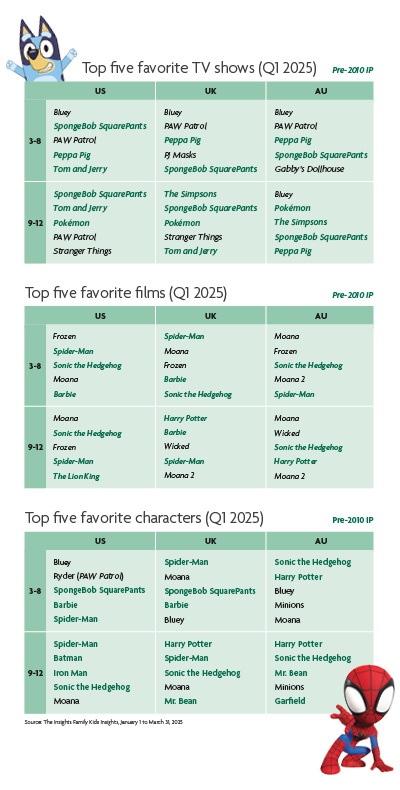
Source: The Insights Family Kids Insights, January 1 to March 31, 2025
What explains the enduring appeal of these characters that debuted before 2000? Their success appears to result from consistent reinvention that preserves the original’s authenticity.
Other possible factors include:
Cultural familiarity: Shared across generations, often introduced by parents
Visual recognizability: Iconic visuals like Mickey’s ears or Barbie’s pink palette
Ubiquitousness: Reinforced through brand extensions into TV series, films, video games, toys and consumer products
How kids find the past
So how does a typical eight-year-old discover 30-year-old entertainment? Today’s non-linear, remixable media is shaped by word of mouth, social platforms, algorithms and (for younger kids) parents. TikTok and YouTube are driving the discovery of nostalgic content through video clips. Streaming service menus mix old and new content in their user interfaces, making shows like Dora the Explorer feel as current as Bluey. Co-viewing also matters—kids often watch The Simpsons with parents or play retro video games like Tony Hawk with older siblings.
Looking at discovery by age group, friends are influencers for all three brackets, while TikTok and suggestions become increasingly important as kids grow up.
What draws kids to eras they’ve not lived through? For Gen Alpha, the past is a creative resource. Retro content helps define unique aesthetic-driven identities, offers comfort in uncertain times, and cultivates a belonging through shared experiences with parents and siblings. Nostalgia isn’t backwards-looking; it’s how kids (with their parents’ help) are shaping their present media world.
Parental echoes are also shaping kids’ sense of nostalgia. Unlike previous generations of parents, Millennials are active co-curators Iron Man (left), Mr. Bean (above) and SpongeBob SquarePants all originated before Gen Alpha kids were born, but remain highly popular characters among this younger demo due to cultural familiarity, visual recognizability, ubiquitousness and generational influence of entertainment for their families. They value the early years, often sharing the TV shows and franchises they loved growing up, sparking a resurgence of Millennial-era culture in Gen Alpha’s world:
Analogue aesthetics: Pixel graphics, VHS filters and Tamagotchis evoke nostalgic ’80s and ’90s design, introducing kids to their parents’ childhoods.
Video games: Classic game franchises like Mario Kart and Pokémon continue to release hugely popular new products.
Fashion and music: TikTok revives early ’00s fashion and ’90s pop-punk music, with kids wearing nostalgic styles and bonding with parents over shared playlists.
Tips for IP owners and creators
Rewind culture isn’t a passing trend—it’s a platform for cross-generational connection. Creators and licensors have the opportunity to deepen their brands’ relevance by blending legacy appeal with modern formats. Here are a few tips to bear in mind when creating content for the Gen Alpha generation.
Design for co-viewing: Package content and promotion that resonates across generations.
Respect the original source: Kids care deeply about authenticity, so reboots should honor the spirit of the original, not just the logo.
Enable remix culture: Offer shareable assets and visual elements that allow kids to personalize and circulate nostalgic content—especially with the growing number of kid creators.
Layer discovery paths: Make legacy content accessible on the platforms kids use, like TikTok, YouTube Shorts, Roblox and curated streaming menus.
Rethink merchandising: Toys, clothes and collectibles that revive classic designs (original Pokémon card sets or vintage Barbie dresses, for example) have a cross-generational appeal. Gen Alpha doesn’t see nostalgia as looking back—it’s how they connect now. With Millennial parents guiding them, media companies can bridge generations, revive classic IPs and build lasting fandoms together.
Adam Woodgate is VP of research solutions for The Insights Family, the global leader in marketing insights related to kids, parents and young adults. For more information, visit theinsightsfamily.com.
This story originally appeared in Kidscreen‘s Q4 2025 magazine issue.




















 Newsletter