
A tense moment is unfolding in a crowded high school cafeteria. The resident mean girl strikes again, knocking down a classmate she’s bullied for weeks. But this time, the target has had enough—and with a single defiant move, she hurls spaghetti back at her tormentor.
Wondering what happens next? You’ll have to check out the next bite-sized episode of True Heiress vs. Fake Queen Bee, a hit microdrama with more than 300 million views on market-leading platform ReelShort.
With origins dating back to the 2010s in China—where they’re known as “duanju”—microdramas have experienced a surge in international popularity over the past year. And Media Partners Asia projects that the global market for this vertically oriented entertainment format will reach US$9.5 billion by 2030.
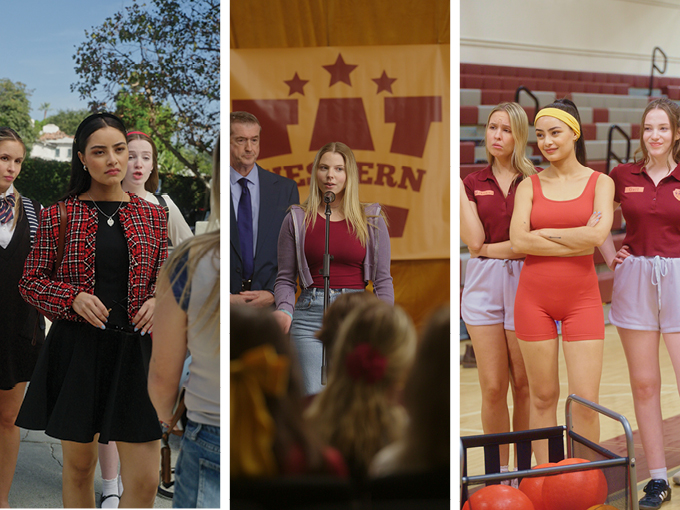
True Heiress vs. Fake Queen Bee revolves around a teen girl who hides her real identity when she joins a new school (Credit: ReelShort)
Microdramas typically comprise hundreds of one- or two-minute episodes with snappy arcs, conflicts and cliffhangers. The top titles often feature high-emotion tales of revenge or forbidden romance, with baddies ranging from werewolves to billionaire CEOs. Think soap operas sliced into tiny pieces for shortform mobile viewing.
They’re primarily aimed at adults for now, and a Q3 2025 Ampere Analysis survey shows their appeal is strong among 18- to 34-year-olds, with 46% of global internet users in this age range reporting that they’ve consumed at least one microdrama on social media. According to the same report, romance, anime and fantasy are the top genres for this format, with YouTube (44%) and TikTok (38%) as the go-to viewing platforms.
“Microdramas sit at the intersection of social storytelling and bingeable episodic content,” says Patrik Wilkens, founder of Mournival Consulting and advisor to TheSoul Group (Slick Slime Sam). Like many, he sees untapped potential for studios to leverage the format and aim for viewers further down the demographic scale. “Kids are already discovering characters through social feeds, and microdramas can be a bridge between discovery and fandom, matching younger viewers’ natural attention rhythms.”
There’s already some early movement in the kids and teen space. Gigglebug Entertainment notably took a big swing with its 2D-animated series Tadpoles (52 x 11 minutes), which is available in a vertical format for smartphone viewing. With DR and Ketnet on board as co-pro partners, Tadpoles presold to Canal+ last year. Meanwhile, ABC Australia has also experimented with bite-sized viewing by repurposing its teen drama The Disposables (from Photoplay Films and Dragonet Films) as a 30 x two-minute vertical series for TikTok.
And Disney just started releasing an ongoing series called Locker Diaries, which follows the high school drama of various Disney Channel characters from inside their lockers. It will run vertically on YouTube, Instagram and TikTok, with a horizontal version streaming on Disney+ at a later date.
But is the kids industry ready to make a full-fledged leap into microcontent? While there are questions around distribution and profitability, some producers are already testing the waters.
Let’s get digital
Mediawan Kids & Family has been busy exploring a digital-first strategy, going so far as to ink a deal last summer to produce a YouTube series based on NFT brand Claynosaurz. The prodco is betting that microcontent will help accelerate that strategy.
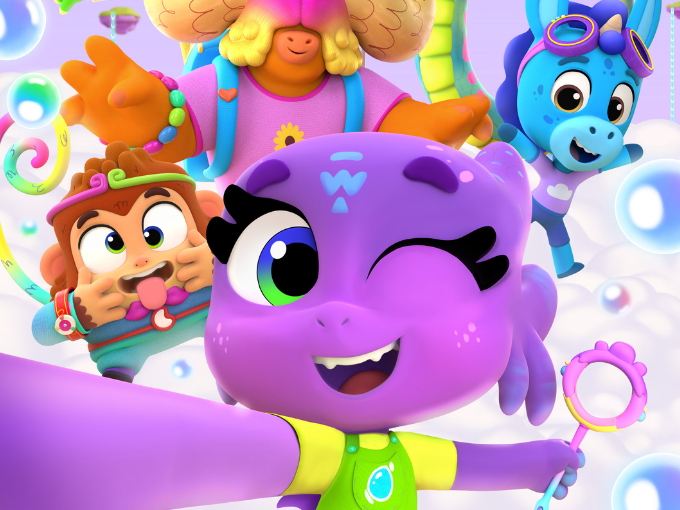
Wadoo is developed as both a micro toon (100 x one minute) and a long-form series (39 x seven minutes)
“We are big believers in [this] new form of storytelling,” says Mediawan president Julien Borde. “It’s a great way to connect directly with consumers and incubate new ideas originated by new talents.”
The studio is working on three microcontent projects that will launch sometime this year. The first of these is a CG-animated series called Wadoo, which Mediawan is co-producing with El Reino Infantil—a company known for creating hit YouTube channels for kids. This preschool toon about a young female dragon is being developed as both a “micro-animation” series (100 x one minute) and a regular longer-form toon (39 x seven minutes), says Borde. It will soft-launch in April with a batch of AI-produced shorts on YouTube, using audience feedback to refine the full series, which is due out later this year.
Still unannounced, Mediawan is also working on microdramas based on a French webtoon and a gaming IP. Borde is keeping further details under wraps for now, but he says the time is right to get into this format, given that global adoption for microcontent is picking up.
He’s seeing particularly strong growth in key regions like Asia and “high potential” in others. After China, the US is the top international market for microdrama consumption, followed by Japan, South Korea, the UK and Thailand, according to Omdia research from October 2025.
New pilot model
Since 2024, LA-based TalesVision has been using social media to launch short-form vertical content for teen and YA audiences as a way to test concepts and gauge which IPs warrant expansion—essentially treating microdramas as pilot experiments.
It’s something of a “pocket pilot” model, notes Stephanie Sperber, president and content chief at Iyanu producer Lion Forge Entertainment. She noticed that the TalesVision title Lostlings (featured image) was doing serious numbers, generating 17 million YouTube views with just three shorts. So last year, Lion Forge signed a deal with TalesVision for a longform series adaptation of this mystery series. Featuring a Stranger Things-inspired vibe, it takes place in a town where a teen disappears every year, only to return with no memory of where they’ve been.
Just as telenovela-style microdramas have forged strong female fanbases, there’s room to recreate that success with youth audiences, says Sperber. “We’re very interested in that YA space, because I think that’s a great demo for verticals.”
And that interest goes beyond Lostlings—Lion Forge has also been quietly developing one of its own IPs to adapt into microcontent. This show will be another YA fantasy, Sperber teases.
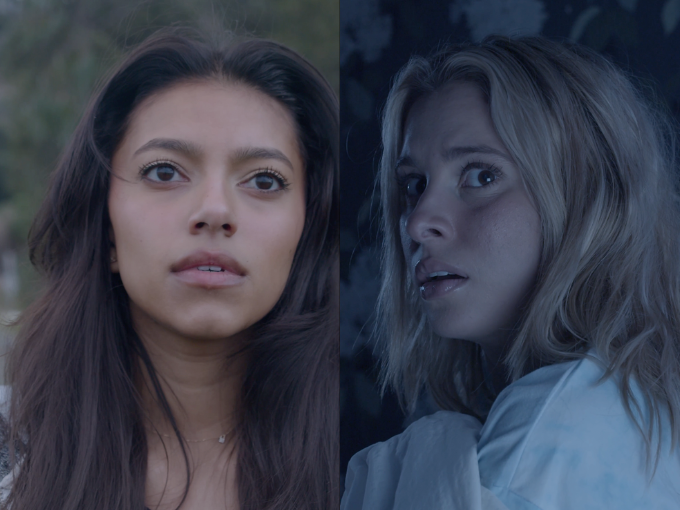
Representing a “pocket pilot” model, Lostlings is making the leap from online shorts to a longform series (Credit: TalesVision)
Lion Forge is looking to explore more microcontent opportunities, and Sperber predicts that other producers may tap into this format as both a storytelling testbed and a new pilot model. “Leaning into microcontent for proof of concept is definitely something that we think will be valuable for the business going forward. It really helps in fine-tuning the approach to a full series.”
Storytelling avenue
The microdrama boom has also been on the radar of Anthony Leo, president of Aircraft Pictures (Geek Girl). From a creative standpoint, he sees the format as a game-changer—effectively reviving the once-declining soap opera genre with modern pacing and distribution.
“There are some really great examples of what you can do with a two-minute YouTube short that gets people hooked immediately on a concept,” he says, echoing Sperber and Borde on the incubation potential of the format.
However, Leo also flags that microcontent is not necessarily a gold mine, as he hasn’t seen a clear and reliable way for producers to make money at it yet—except for a few shorts going viral and pulling a massive audience on YouTube.
“We’ve been looking at this format more as a storytelling opportunity—a way to explore things that [can’t fit] in a scripted series we’re developing,” he says. Aircraft is working on a yet-to-be-announced longform series aimed at tweens and teens—with a premise following a group of characters in a school—and Leo says his team is toying with the idea of starting off with microcontent as a way to introduce the gang and tease a bit of their backstory before the launch of the actual show.
“It would be a microdrama told from different characters’ perspectives, so by the time we get to the series premiere, audiences have already [familiarized] with the world and the group we’re following in the series.” The team is still testing whether it’s better to release that content months ahead or concurrently with the main show.
Monetization uncertainty
Bite-sized vertical series come with the cost advantages of speedy turnaround and lower budgets. But one of the biggest hurdles Wilkens sees for microcontent in the kids sector is a monetization ecosystem that’s still very immature and inconsistent. “CPMs are low, targeting is restricted, and reliance on ad revenue alone is unsustainable. Until platform models stabilize, this will remain one of the biggest structural risks.”
He adds that producing for under-13s also means regulatory roadblocks around COPPA, and platform-specific restrictions on personalization and data collection.
Many platforms will offer initial episodes for free, while subsequent ones are paid or ad-based. Omdia data notes that 60% of global microdrama revenue comes from subscription or transactional payments—with average revenue per user (ARPU) up to US$80 per month. But since leading shorts platforms (such as ReelShort, FlareFlow and DramaBox) are targeted primarily to adults with suggestive titles and thumbnails, they’re less likely to draw in family audiences.
Before kids producers can profit, microcontent services will need to become more compliant—or existing kids platforms will need to expand into this format.
Wilkens expects the first dedicated kid-safe vertical apps to start hitting the market next year. “By 2027 or 2028, we’ll likely see major consolidation, with legacy media companies acquiring the best-performing apps and content houses to catch up and secure audience ownership.”
Other considerations
Current microdramas on popular digital distribution platforms are estimated to cost between US$3,000 and US$5,000 a minute to produce on average. Depending on the number of episodes planned, producers can potentially explore tax credits.
Leo sees Canada as one of the regions that’s well-positioned to offer a leg-up, with funding available from the IPF fund (short-form series development program) and Bell Fund (short-form digital series program), among others.
In terms of the content itself, producers have a responsibility to adapt the microdrama format with younger viewers in mind, says Sperber. “I don’t think it should necessarily just replicate what’s being done for adults. It means working with smart creators who know how kids consume at different ages and how their brains are developing. It should deemphasize the reliance on extremes to keep viewers engaged.”
Wilkens agrees, noting that adult microdramas’ focus on conflict, jealousy and shock-value won’t work for kids and tweens. “That emotional intensity has to be completely re-engineered. Humor, empathy and positive resolution must replace tension and aggression, which makes creative development far more complex.”
He recommends relatable stories digging into things like friendship conflicts, family humor and school dynamics as a good place to start. Genres such as comedy, slice-of-life and DIY are strong performers that are easier to adapt for all ages. “Genres requiring deep lore or slow pacing—like fantasy, adventure or moral-heavy education—have a harder time in vertical feeds. They simply can’t build stakes in 45 seconds.”
This story originally appeared in Kidscreen‘s Q1 2026 magazine issue.




















 Newsletter