
This story was originally published in Kidscreen’s Q2 2026 magazine issue. To read the full issue, click here.
Since its debut in 1974, Dungeons & Dragons has led the market as the pioneer tabletop role-playing game where kids and adults alike can use their imaginations to create lore-rich characters and transport themselves into fantastical worlds.
D&D has come a long way from being seen as a nerdy vehicle for devil worship in the ’80s to becoming a mainstream entertainment brand, thanks to Netflix hits like Stranger Things and Paramount’s 2023 live-action feature film Dungeons & Dragons: Honor Among Thieves, which have helped introduce new players to the experience.
Now D&D brand owners Hasbro and Wizards of the Coast (WotC) are continuing this momentum by introducing a new generation of younger players to the role-playing game (RPG) ecosystem through a licensed toy line, while also making its advanced game systems easier to learn.
Embarking on a new quest
To help spearhead this latest RPG initiative, Hasbro tapped longtime licensing partner Basic Fun! last year to begin co-developing a new D&D toy line targeted at kids ages five to eight. The Florida-based toyco was an easy choice, given that Basic Fun! has helped successfully revive several Hasbro-owned brands at retail for new generations of kids, including Lite-Brite, Littlest Pet Shop, Tonka and Stretch Armstrong.
“What made this partnership especially compelling is that so many D&D players today are parents,” says Basic Fun!’s SVP of marketing Dan Westcott. “This incoming toy line creates a unique opportunity for a deep bonding moment for families—plus it’s just a great way to connect kids and their parents to this fantasy universe that they both get excited about.”
The end result is Dungeons & Dragons Questers, a gateway product into the D&D universe that combines blind-box collectibles with buildable action figures. Questers is set to roll out at major retailers worldwide in July, launching with three collectible categories—Adventurers, Monsters and Creatures—to help kids begin building their own RPG-style stories at home.
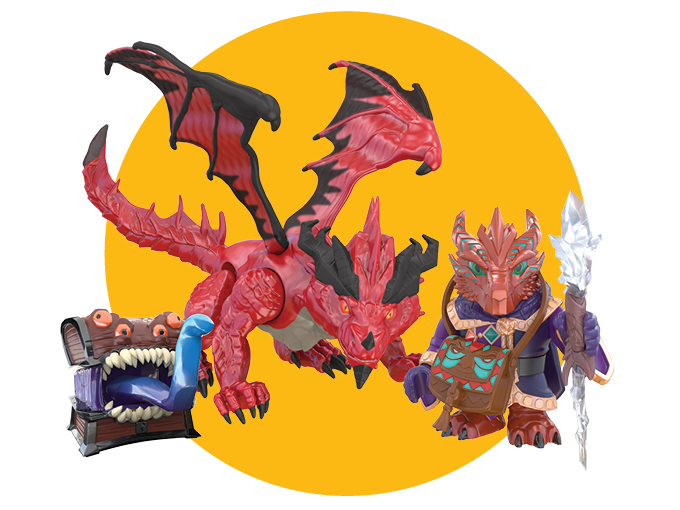
To introduce kids to the D&D world, BasicFun! and Hasbro co-developed the Dungeons & Dragons Questers toy line (Hasbro)
Basic Fun! landed on this play pattern for Questers by identifying early on in development that Gen Alpha children and their parents are looking for elements of surprise, personalization and co-creation, giving kids room to drive the experience with their imaginations, Westcott says. These elements go hand-in-hand with D&D’s existing systems, where players are motivated to dive deep into character creation by forging a backstory for their adventurer, selecting their skills and choosing which archetype or class they should specialize in.
Outside of the core figures, each Questers product also comes packaged with a 20-sided die, a scorecard and a mini storybook that sends kids on an original quest. Kids will be prompted to roll the die throughout the book, and the story will have a different outcome depending on whether they score a high or low number.
“The best collectibles for kids don’t end at the unboxing; they have to open up a new world of play to retain them and return for more purchases,” says Westcott. “Our primary goal right now is to establish the identity of the line, make a strong first impression on the market, and over time, add in all the layers and different storytelling elements that make the D&D universe so special.”
Descending deeper into the dungeon
In the lead-up to Questers hitting the market, Hasbro and WotC have been actively laying the foundation for new players to experience D&D. This began in 2024 when WotC rolled out the updated 5.5 Edition core rulebooks for the pioneering RPG, designed to make the game more accessible by streamlining combat rules and character creation and providing tips on how to begin serving as a dungeon master and creating original campaigns.
Tabletop games have undergone a renaissance in recent years, with 76% of the active player base joining the community within the last 10 years because of how the franchise has influenced or been featured in TV, films, publishing, consumer products and video games, says D&D game design director Justice Arman. While it’s hard to pinpoint just how large the D&D community is, WotC’s digital platform for the game, D&D Beyond, has racked up more than a million active subscribers since 2023.
WotC then followed this new edition release last year with its D&D Starter Set: Heroes of the Borderlands—a US$50 box set that comes packaged with nine double-sided maps, pre-generated characters, plenty of dice and three introductory adventure booklets to help player groups of all sizes start role-playing. The process of designing the beginner’s set took more than a year of playtests with groups of people of all ages and experience levels, Arman says, adding that WotC designers tweaked components and the gameplay experience in real time to remove as many barriers as possible and boil the game down to its core elements.
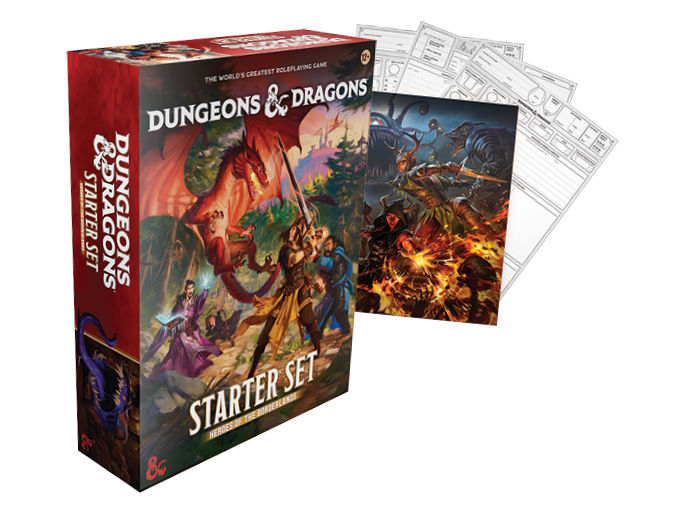
The Heroes of the Borderlands starter set offers new groups a gateway into playing D&D (Hasbro)
“The boxed-set format also allowed us to express many of D&D’s rules through components and iconography, reducing the text to its most important primordial bits,” says Arman. “In other places, we internalized certain aspects of the game—or made them otherwise invisible.”
The biggest challenge for the RPG market is the same one affecting the wider entertainment industry today—grabbing people’s attention and time, says D&D executive producer Greg Bilsland. He sees TikTok and YouTube as the game’s largest competitors, simply because kids and adults can easily slip into passively consuming content on social media, streaming services or gaming on their mobile devices instead of dedicating the time and effort to learn a game system.
While the latest books and starter set have helped simplify the path into D&D, Hasbro’s long-term play is to continue growing the brand into a multi-generational franchise, using licensing, entertainment and consumer products as the primary vehicles to draw people into the fandom. Once engaged, emerging fans can then visit local game stores, participate in online sessions or simply gather with friends around a table to immerse themselves in the RPG’s open-ended adventures.
The D&D brand has stood the test of time for more than 50 years because it offers a flexible storytelling experience, Bilsland notes. If players don’t like certain elements of the core game or find specific mechanics too finicky, they’re free to adapt them to fit their preferences. The written rules are merely guidelines to help players along the way—not laws that are set in stone. This shared experience of cooperative thrills, shifting outcomes and immersive quests makes it hard for D&D players to leave once they get hooked into the game’s ecosystem, he adds.
For Arman, forging interpersonal bonds is key to the appeal of games like D&D. “In the era of smartphones and social media, human beings are more connected than ever, [but] at the same time, we’re facing an unprecedented loneliness epidemic. As personalized algorithms deliver increasingly curated content and gaming spaces disappear, [kids and families] crave opportunities to gather and share meaningful experiences together—and RPGs are one antidote for that.”
Lead image courtesy wirestock via Envato.



















 Newsletter