
In an industry that’s typically dominated by series and feature films, one-off specials are quietly becoming one of the most strategic formats in kids entertainment. Once largely reserved for holiday windows, they now serve a broader purpose—boosting discoverability for platforms, filling seasonal gaps for studios, and giving franchises a sandbox to test new tones, characters and formats. And their value has only grown in these challenging times. With financing sources drying up, budgets shrinking and co-viewing habits on the rise, specials offer a flexible, scalable way to test out new ideas and breathe fresh life into existing properties.
For Netflix—which has curated a largely IP-driven catalogue of kids specials—this format is proving to be an especially strong performer. The streamer’s top 50 kids & family specials generated more than 600 million views last year, according to its 2024 What We Watched data. And its most-viewed titles overall included Trolls Holiday, The Bad Guys: Haunted Heist, Chip and Potato: Chip’s Holiday and The Bad Guys: A Very Bad Holiday. Plus, Illumination’s bite-sized special Sing: Thriller ranked as Netflix’s most-watched kids film in the second half of 2024.
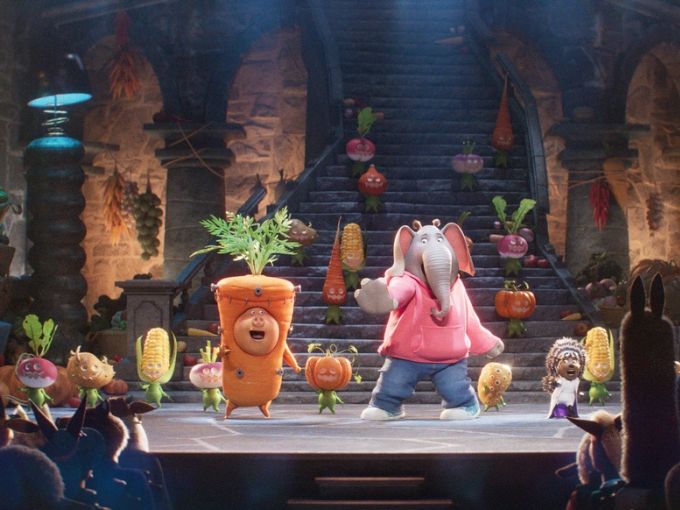
Sing: Thriller was the top kids title on Netflix’s list of the 10 most-watched movies in the second half of 2024
Not to be outdone, Nickelodeon ordered a batch of five hour-long specials in May for Spin Master’s PAW Patrol series, and Apple TV+ commissioned more music-driven one-offs for its kids catalogue—recent releases have included book-based Lulu Is a Rhinoceros and the first original Peanuts musical special in 35 years, Snoopy Presents: A Summer Musical.
In the UK, Magic Light Pictures—best known for adapting the books of Julia Donaldson and Axel Scheffler—has also seen growth in this part of its business. Its latest BBC specials drew more than a million viewers each—up 20% from the previous year. This rise in demand is a reflection of shifting viewer habits, says co-MD Martin Pope. “There is an [increased] sense of people wanting to be together, so shared viewing is very important.”
Fortified franchises
Spin Master Entertainment has been experimenting with specials for nearly a decade, using them as a way to “eventize” PAW Patrol, explains president Jennifer Dodge. She underlines several benefits from a franchise planning standpoint, including their strong repeatability and linear marketing pushes when a special is about to air. “In the streaming world, they create another entry for discovery and engagement because the special has its own thumbnail—which means multiple thumbnails for your series,” she says. Specials also appeal to older kids who may not want to tune in for regular episodes, but are more open to watching a one-off, even if it’s younger-skewing. “When something is a holiday special, we all have permission to watch it,” Dodge explains.
Iceland-based Tulipop Studios is leaning on specials to strengthen its flagship series Tulipop Tales between seasons, while also using them to create a theatrical revenue stream. The indie studio is working on a three x 30-minute package of “Tulipop Seasons” specials—A Midwinter Tale, Pumpkin Pip and Whoosh!—each aligned with a different time of year. This push beyond the traditional holiday window is a clear sign of broader opportunities in the market. For example, consider that Spin Master strategically released its Unicorn Academy: Legendary Summer special on Netflix in April 2025— typically when the target demo starts feeling excited about the upcoming summer break.
For Tulipop, its project began when Icelandic cinema chain Sambíó asked for short-form kids content for morning screenings. The team initially simply repackaged existing episodes, but quickly saw the potential to develop specials tailored to that specific need. While Tulipop’s three specials have a theatrical-first distribution approach, they’re designed to keep brand awareness going all year long, supplying their commissioners—Nordic broadcasters RÚV (Iceland), NRK (Norway), SVT (Sweden), DRTV (Denmark) and YLE (Finland)—with family-friendly content to fill gaps in their schedules, explains Tulipop co-founder Helga Árnadóttir.
“For families with preschoolers, a half-hour special hits the sweet spot of being long enough to be eventful, but short enough to fit into busy routines,” she notes. A Midwinter Tale will hit Icelandic cinemas in November, in advance of a Christmas broadcast on RÚV. And the plan is to add event-oriented elements to the theatrical screenings, including mascot appearances and hands-on activities for kids. This test will allow Tulipop to fine-tune the content on a local level, leading up to a broader global rollout in 2026 and beyond. Árnadóttir is seeing increasing global interest in this kind of event cinema, with theater chains in Italy, France and the UK already in talks to run the Tulipop specials.
Format expansion
In some cases, a one-off can promote franchise growth by helping to lay the foundation for a TV show. The iconic Adventure Time franchise, for example, began as a short film in 2007 before being picked up by Cartoon Network in 2010. Successes like that are why sister prodcos Paris-based La Cabane and Belgium’s Thuristar decided to expand their 15- minute short Luce and the Rock to build out the upcoming series Luce in the Lovely Land. “It served as a proof-of-concept that we could refer to when pitching the series,” says La Cabane/Thuristar founder Perrine Gauthier. “And since broadcasters like France Télévisions and VRT-Ketnet had already bought the short, they were on board to develop the expanded series as well.”
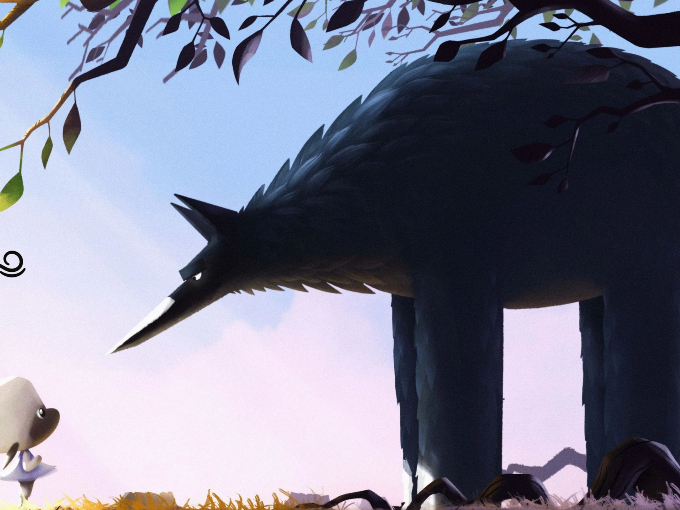
La Cabane and Thuristar’s A Lamb’s Stew made waves as the best-attended co-pro pitch at Cartoon Forum last year
The studios’ latest one-off, A Lamb’s Stew, quickly gained traction after it was deemed the best-attended co-pro pitch at Cartoon Forum 2024. This 26-minute CG-animated special has been presold to Canal+, ZDF, RTS and VRT-Ketnet. “Several buyers also asked about and expressed an interest in a follow-up series,” adds Gauthier. Backed by Creative Europe MEDIA, the CNC, the Flanders Audiovisual Fund, Procirep and Angoa, La Cabane and Thuristar are currently focused on the special itself, but its Beastshire world—featuring a young lamb, misunderstood wolf and colorful animal residents—is ripe for expansion. Even without a series tie-in, specials can be financially viable. Luce and the Rock generated revenue with its theatrical run in France and international sales through distributor Miyu Distribution. “It wasn’t a business play initially,” says Gauthier, but it led to roughly 120,000 total tickets sold.
For its part, Magic Light is also going the special-to-series route, with a CG-animated series in the works that follows up on two successful BBC specials: Zog (2018) and Zog and the Flying Doctors (2020). The latter title, in particular—about three dysfunctional doctor friends (a princess, a knight and a dragon) who fly around helping people—emerged as “a fantastic starting point for the sequel to develop as a series,” explains joint MD Michael Rose. “The special was, undoubtedly, a fantastic sort of shop window that showed us that the characters were popular.”
Specials can also be a creative playground, offering space to explore new ideas, expand lore or spotlight side characters with growing fan appeal. One example is a recent PAW Patrol special Valiente: A Tracker Story (featured image) from Nickelodeon that gives Tracker—the bilingual, jungle-dwelling chihuahua who has long been a fan-favorite— some time in the spotlight. “He’s not one of our regular pups, but fans love him,” says Dodge. “He has a great location in the jungle and speaks Spanish—which [appeals] to a large part of our audience—so we saw [the opportunity for a special] just to tell a great story about Tracker.”
Toying with specials
Two years ago, Hasbro took a swing at a consumer products tie-in for a special when it released toys related to Peppa Pig Cruise Ship Special, its 20-minute one-off that tags along with Peppa and George on a cruise with their grandparents. After the title’s June 2023 premiere on Nick Jr., Hasbro launched a cruise ship toy set with 13 accessories and three unique character figures. Specials are “event moments” in the eyes of kid audiences, says Kristin McKay, Hasbro’s SVP and GM of global brands, fashion and preschool.
“Connecting a toy to that kind of storytelling gives it added meaning and value, often turning it into a must-have.” In this case, it also meant mining the toyetic potential of everything from Peppa’s floral look on vacation, to the ship’s many rooms. “A holiday adventure naturally lends itself well to play [since] it’s full of movement, exploration and imagination,” notes McKay.
Hasbro declined to disclose sales data, but McKay says the company is looking to align more product launches with standout entertainment events like special episodes. “It’s a model that strengthens brand connection and enhances engagement, and it will continue to be part of our long-term brand storytelling strategy.”
From festival to film
Even titles that might not seem all that commercial can find a way into today’s special-to-series pipeline. One example is the 2D-animated My Life in Versailles from France’s Films Grand Huit. Originally released theatrically in 2020, this half-hour family special sold more than 50,000 tickets locally before airing on France Télévisions. Its story revolves around an eight-year- old orphan girl who goes to live with her gruff uncle—a maintenance worker at the Palace of Versailles—and the two find new kinds of fun and family in the spectacular setting.
Garnering strong reviews and more than 20 prizes at international festivals, My Life in Versailles quickly captured the attention of Xilam Animation, according to EVP of distribution Safaa Benazzouz. In 2023, France Télévisions ordered a five x 26-minute series based on the special, which Xilam signed on to co-produce and distribute. Starting with a special was beneficial when it came time to finance the TV adaptation, notes Films Grand Huit producer Lionel Massol. “We [budgeted] around EUR€3.4 million (US$3.9 million) for the series because we had the TV special as proof that it was really good content. But on the other hand, it was also more complicated because the [TV show] had to be at the same artistic level as the special.”
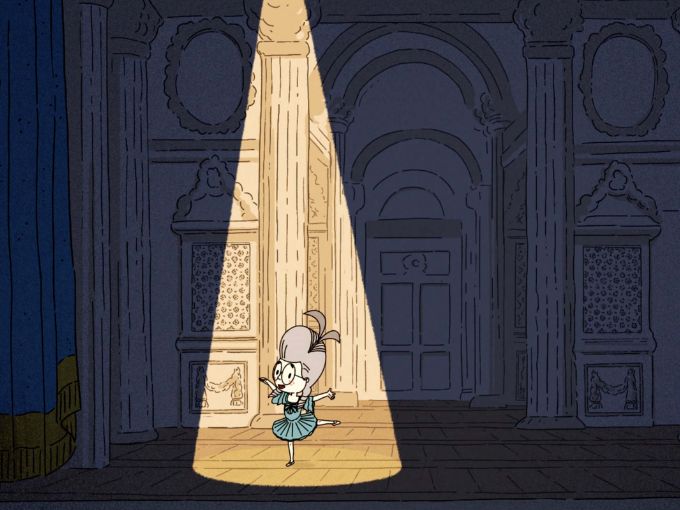
Dandelooo Cinema acquired exclusive worldwide distribution rights to My Life in Versailles – The Movie
Even before production had wrapped on the series, Massol and his team started building more entry points for the budding franchise, securing a publishing agreement with L’École des Loisirs for six books that sold more than 40,000 copies in France. In today’s risk-averse TV landscape, the more well-known something is, the better its chances of attracting buyers, says Benazzouz. “Having My Life In Versailles as a one-off that was very established was very reassuring.”
However, she cautions that the TV marketplace and its financing avenues remain extremely strained. One strategy Benazzouz has been mulling over—although she hasn’t yet acted on it—is using specials as a playground to test revivals. “Having a special could be a great way to test your content in a new format or to reboot a brand.” Meanwhile, the Versailles franchise is still in expansion mode, with a new 78-minute feature film (which combines existing episodes from the series) releasing this month in France. Films Grand Huit and Mélusine Productions are lead producers with Xilam Animation and Miyu Productions on board as co-pro partners. In a key partnership forged this summer, the team has tapped Dandelooo Cinema to handle exclusive global distribution rights for the film (excluding France, Italy, Switzerland, Germany and the UK). And French distributor Jour2Fête is planning a domestic theatrical release near the end of this year.
Finding new markets
While public broadcasters have historically been the biggest investors in specials, seasonal viewership increases for this format are inviting new players into the space. They include US-based Holiday Channel, which is set to launch its SVOD platform later this year, featuring festive content year-round, with a major focus on kids specials.
“As we plan for the 2025 holiday season, creating content for a younger audience is a key factor,” says president of streaming Todd Schwarzschild, who has been spearheading acquisition efforts since joining Holiday Channel in January. “We know viewership among two- to 11-year-olds jumps by as much as a third during the traditional holiday season.” But the platform isn’t just focused on Christmas. It’s also actively looking for one-offs that celebrate multicultural traditions—from Hinduism’s Holi and Diwali, to Thailand’s Songkran water festival and Midsummer in Sweden. Even quirky observances like National Pizza Day are on the table.
Holiday Channel is looking for one-offs and snackable films featuring “traditions and celebrations that audiences may not have seen or experienced before,” says CEO Reesa Ryder. It’s part of a strategy to provide an “armchair travel” experience, along with a feel-good, every-day-can-be-a-holiday vibe. “A large part of the impetus of our programming is to try and unearth those hidden gems of holiday specials from around the world,” she adds.
As studios, streamers and indie creators continue to adapt to a shifting media landscape, one-off specials are proving to be more than just seasonal treats or stop-gaps in between seasons. They’re becoming flexible tools for experimentation, brand extension and global discovery—meeting audiences where they are and offering new ways to build emotional connection. And in a climate where attention is scarce and budgets are tight, specials may just be the format that’s best-suited to punch above its weight.
This feature originally appeared in Kidscreen’s Q4 2025 magazine issue.



















 Newsletter