
This feature originally appeared in Kidscreen’s Q4 2025 magazine issue.
From an industry POV, it’s hard to think of anything that has dominated the zeitgeist lately as much as anime has. A May 2025 Crunchyroll-NRG report found that while all generations are contributing to this cultural momentum, anime is especially popular among 13- to 28-year-olds (54%)—outpacing the NFL (48%) and K-pop superstar group BTS (39%) for attention.
Why are these young audiences so enamored? Jerome Mazandarani, head of anime and young adult at UK-based distribution and production company 8 Lions, has an answer. “Western audiences have grown tired of the self-aware and sarcastic tone of much of the [content] we deliver to them; it’s too cynical.” Apart from a few notable exceptions (Bluey, KPop Demon Hunters, the Spider-Verse franchise), he sees “a lack of emotional stories that are direct, intense and deeply felt”—and that’s a gap that anime has been able to fill. “Asian writers generally preoccupy themselves with emotional truth, [and] this resonates,” says Mazandarani.
Anime mania was especially evident at Annecy this year, with a palpable buzz across many panels, meetings and kids content announcements by some pretty heavy-hitters. BBC Studios Kids & Family teased an anime-inspired Children Vs Battle SuperStars animated series (featured image) it’s working on with Blink Industries; the powerhouse Miraculous brand previewed its Miraculous Stellar Force anime spinoff; and Disney EMEA spotlighted Paris-based Chouette Studios’ Dragon Striker on its slate, touting the broader importance of the show’s anime influences.
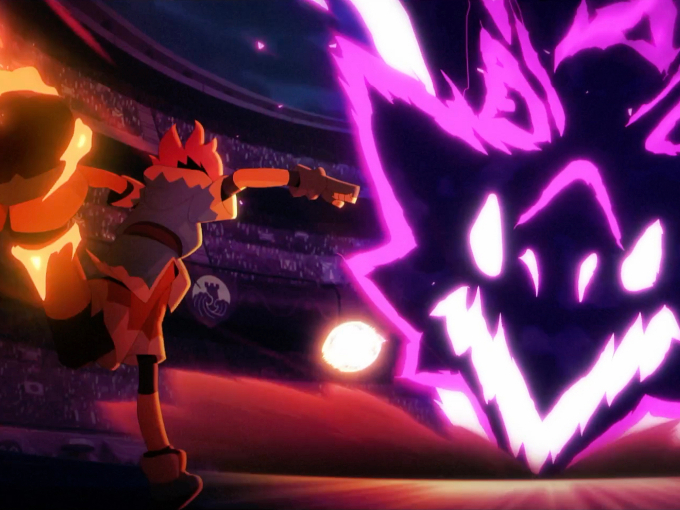
In an elite academy where sport meets magic, the anime-inspired Dragon Striker will launch on Disney+ and Disney Channel
“One of the things we identified a while ago was that we have an audience that loves anime, whether it’s Japanese or French anime-inspired productions, or serialized adventure series from all over the world,” Disney Branded TV’s VP of international animation Orion Ross told a packed room at the annual animation fest. “There is this love for epic world-building, big emotional stories, long arcs, complexity, adolescent struggles—all the kinds of things that you find in classic anime.”
Gauging markets
Wall Street research firm Bernstein recently forecast that the international streaming market for anime could triple by 2030 to hit US$12.5 billion in annual revenue. Reports have also pinpointed the US, France, India and Brazil as regions that are fueling this overseas growth. Miles Atherton, CEO of anime consultancy White Box Entertainment, says his research shows a number of Japanese titles performing well with tweens/teens in North America, specifically Solo Leveling, Jujutsu Kaisen, The Apothecary Diaries, One Piece, Demon Slayer: Kimetsu no Yaiba, Haikyu!!, To Be Hero X and Wind Breaker.
While privacy laws make this kind of analysis challenging, he sees clear hooks for younger viewers. “More broadly, anime featuring self-discovery and characters that don’t fall into the gender binary tend to overperform with under-18s,” Atherton notes. Another trend: Younger audiences today are less interested than previous generations were in isekai (stories about being transported into another world). “For audiences younger than teens, it’s more anecdotal. But Studio Ghibli and Pokémon truly reign supreme there,” he adds.
“There are very few children’s anime dubbed into English and airing on network television or cable that have been able to catch on in the last decade or so.” The UK is also emerging as a growth market, with regional producers beyond BBC Studios keen to explore the form. For example, London’s Lime Pictures (Wolf King) is betting on a slate of anime projects for the seven-plus demo, including an action-comedy and a rom-com—all featuring “a uniquely British spin while honoring its Japanese origins,” says creative producer Barry Quinn.
Western contrast
Although anime is no monolith, one of its common elements is Kishōtenketsu—the four-act structure of Japanese storytelling (unlike the three-act Western model)—which fans see as giving anime a slower pace and greater complexity, says Falcon’s Beyond creative development EVP Eric Calderon. And Japanese anime is more focused on genre than strict age demo appeal, unlike its Western counterparts, he adds. “Take Dragon Ball Z—it’s in the genre of shōnen (young boys action), but we can see fans as young as six and as old as 50.”
It’s within these genres where creatives can learn more of the unique tropes and “guidelines” that underpin them. Shōnen, for instance, commonly features protagonists who declare their goal out loud and carry that theme through their journey. “In One Piece, Luffy exclaims that he wants to be ‘King of the Pirates!’ And Naruto claims he’s going to be ‘The 9th Hokage’ (leader of the Ninja village).”
Eight years ago, Calderon coined the term “Cowboy Anime” to describe toons inspired by Japanese anime but produced outside of Japan (and as a nod to Texas-based Powerhouse Animation Studios, producer of Castlevania). Comparing the form to hip-hop, Calderon says authenticity and cultural immersion (watching anime, attending conventions and noticing cosplay) are crucial, since audiences can easily sniff out knock-offs. “My heart breaks when I see well-meaning, talented, experienced creatives try to make their Dragon Ball or their Naruto. [Viewers] will probably wonder, ‘Why watch the [knock-off] version of the thing I like when I can just watch the real thing?'” For some of the biggest anime-inspired kids hits beyond Japan (Totally Spies!, Avatar: The Last Airbender), success came from weaving in something specific and non-Japanese that felt organic, he adds.
Cultural crossover
In April, My Life is a Manga from France’s Blue Spirit and Brain Comet secured the backing of 11 EBU public broadcasters, which collectively committed US$64,900 (€60,000) in development funding to the project. France Télévisions led the charge, but it was notably joined by the BBC (UK), RTÉ (Ireland), NRK (Norway), SVT (Sweden) and RTVE (Spain), among others.
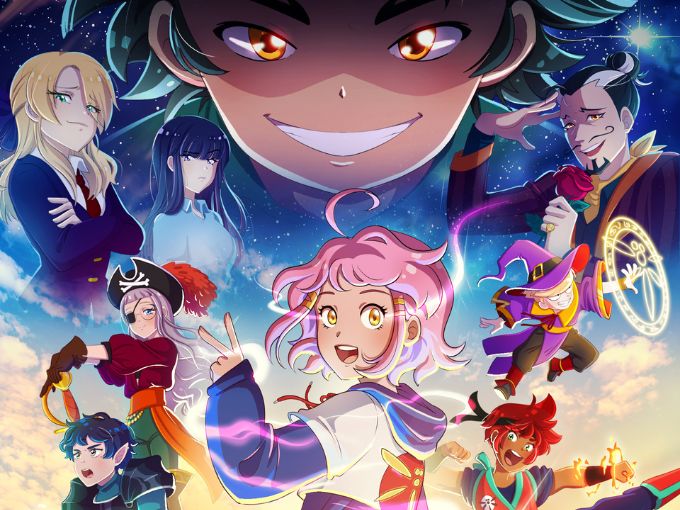
Led by the EBU, 11 pubcasters committed US$64,900 in development funding for French series My Life is a Manga
This is yet another sign of anime evolving from a niche into a potential pillar of European kids programming, says Brain Comet creator and producer Nicolas Monteiro. “Broadcasters want to meet the needs of audiences who are already consuming this style massively, while adapting it to their editorial requirements.” The 52 x 11-minute tween series is budgeted at US$9.8 million (€8.5 million), which Monteiro says is higher than the Japanese average, but consistent with a fully French production’s higher labor and structural costs.
It’s what he calls “anime made in France,” prioritizing Japanese design/creative tropes with a European flair. The premise revolves around Liya, a Parisian girl inspired by manga to overcome everyday problems. Each episode is structured like a short shōnen (13 minutes with build-up and climax), while the characters will range in cultural and ethnic backgrounds for more global appeal.
The producers also plan to leverage tropes like characters breaking into chibi versions during battles and “eyecatch” transitions (a popular type of ad bumper used in Japanese anime). Monteiro is bullish about the show’s global prospects, with early plans for expanding into gaming, trading cards and a movie. Building a multi-format presence in Asia is part of his strategy—and deals are underway with a Japanese manga company (to launch a young mangaka contest) and a South Korean publisher (to create webtoons for the IP).
Hunting for gold
If there was a big entertainment winner this summer, it was probably Netflix’s anime-inspired musical KPop Demon Hunters, which skyrocketed to become the streamer’s most-watched movie of all time. Jerome Mazandarani, head of anime and young adult for 8 Lions, credits producer Sony Pictures Animation’s deep-rooted love of the anime genre—first demonstrated in the studio’s Spider-Verse films—for its willingness to take a chance on KPop at a time when greenlights were (and still are) scarce. The premise—a K-pop girl group slaying demons between stadium shows—was an undisputed global hit.
The film blended the shōnen action narrative with the beats of a “magical girl” story, adapting two major anime genres, notes Mazandarani. Other typical hallmarks included a close-knit group of friends with a deep bond, a training montage (“even if it’s more about dance than fighting”) and a climactic battle against an overwhelming evil, he adds. While the Spider-Verse saga had a hybrid 2D/CG animation style and dropped frame rates (known as “animating on twos”), KPop Demon Hunters leaned into more of a 3D design aesthetic. “However, it takes the anime influences even further with the incorporation of gag manga in the film’s first hilarious act,” says Mazandarani.
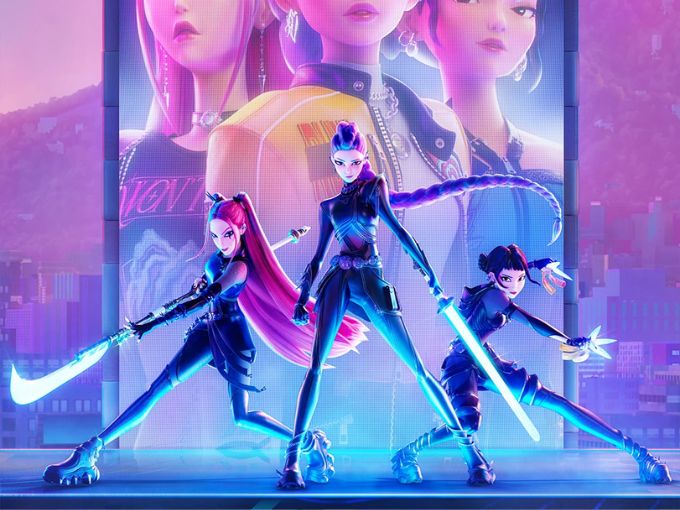
This year’s summer breakout KPop Demon Hunters has skyrocketed to become Netflix’s most-watched movie of all time
With its “exaggerated, illogical and often silly visual gags,” the movie uses this style of comedy in moments such as Zoey sprouting corn eyes that turn into popcorn when she’s checking out an attractive boy band member. Chibi transformations are common motifs in gag comedy, where characters will morph into simple, squishy, child-like versions of themselves to amplify their emotions. “For instance, someone might literally turn to stone in a moment of profound shock, or their head might ‘explode’ to signify extreme anger. This subverts the expected reality of the show, allowing the entire world to distort for the sake of a joke.” This likely explains the film’s appeal with Gen Alpha, adds Mazandarani. “In today’s world of social video and dank memes, it should come as no surprise that gag manga tropes have become part of the contemporary tween/teen lexicon.”
Other opportunities
“Japanese animation is not a service-based economy. Co-productions are rare,” says Mazandarani, though things are opening up. “European producers like Miyu are carving a path in how it can be done, along with producers like Elypse and ZAG, which are slowly building relationships with local creators.” He adds that 8 Lions is working both ways—supporting Japanese creators entering Europe and the Middle East, and helping foreign producers gain traction in Japan.
While Japan excels at producing anime for tweens, Mazandarani sees “a lot of room for growth of these kids anime brands” outside Japan—and that’s something he’s keen for 8 Lions to buy. He’s also keeping an eye on youth-heavy gaming spaces like Roblox. “Almost 23% of all monthly users spend time on unlicensed games inspired by some of the most popular anime IPs,” he says, predicting that future anime-inspired brands will evolve on the Roblox platform.
In terms of specific genres, Calderon has long contended that romance is a major whitespace in anime. “We’re already seeing how strongly that genre occupies the webtoons space,” he says. “Among the hundreds of things we can learn from KPop Demon Hunters is that a well-told romance is always welcome and celebrated.”



















 Newsletter