
By Jane Gould
To mark Kidscreen‘s 30th anniversary, we’re pausing to look back—and to look ahead—at an industry shaped by constant change, creative risk and a stubborn belief that what we do matters deeply. Please join us as we celebrate three decades of proudly supporting that. And here’s to bravely embracing whatever comes next.
When Kidscreen first launched in 1996, a nine-year-old somewhere was racing home to catch Boy Meets World, completely unaware that a call-waiting beep might interrupt their evening. Thirty years later, today’s 10-year-old is curating their digital identity across multiple platforms, code-switching between Discord servers while their parents worry about screen time, mental health and a world that feels infinitely connected, yet also disconnected. What happened in between? Everything. And nothing at all, somehow.
For three decades, Kidscreen has chronicled the evolution of kids media, tracking the seismic shifts from broadcast to streaming, from appointment viewing to on-demand everything, and from collective experience to personalized algorithms. But beneath the technological transformation lies something more fundamental— the experience of being a child itself has been reimagined.
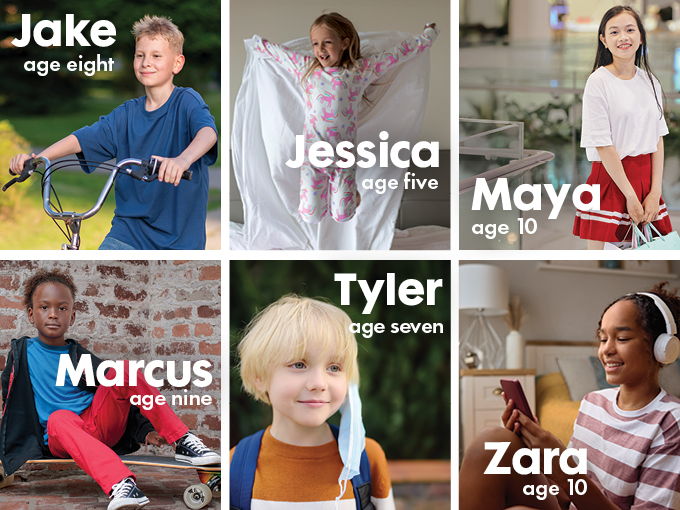
Let’s look at how six typical kids across the decades discovered their worlds, navigated friendships, adopted new technologies and, ultimately, found their identities. What has fundamentally changed? What remains remarkably constant? And what does it all mean for those creating content for today’s evolving generation?
1996
Jake’s world has boundaries—physical ones. “It’s getting dark” means it’s time to go home. His mom doesn’t know exactly where he is after school, and that’s normal. But she knows he’s probably at Trevor’s house, or riding bikes at the park, or maybe at the arcade. He’ll turn up by dinner.
Friday night is sacred: It’s TGIF on ABC. Jake watches Boy Meets World and Sabrina The Teenage Witch with his sisters, all of them commenting on the same moments at the same time. On Saturday morning, he’s up early for cartoons—X-Men, Power Rangers. There’s a rhythm to it; a shared cultural calendar. Everyone in his class has seen the same episode of a particular show and laughed at the same funny moments.
His biggest worry? Finishing homework or acing a test. The internet exists—but it’s not yet part of his daily life. Identity is formed face-to-face, in real time, with in-the-flesh rewards, lessons and consequences.
2002
It’s Saturday morning. Jessica hops into the living room in footie pajamas, pops in a Barney VHS tape and settles onto the couch. Mom makes breakfast. The same episodes play on repeat until the tape wears out. There are 10 or 15 videos in Jessica’s rotation. Everyone in the house can recite them and sing every song. Parents know exactly what their kids are watching because they oversee their family’s well-displayed video tape collection, and there are only so many options. Co-viewing happens naturally because the TV is in the shared space. Repetition is built into the format—you have to get up to change the tape.
Parents feel good about this. The content is enriching. Their child is learning, problem-solving, following narratives. Parents need a break from their kids, so they happily welcome more content into their living rooms—Jessica can watch alone while her parents decompress, make dinner, answer emails and manage the household.
2007
Maya’s world is expanding, pixelating and becoming something new. She still plays outside, walks to her best friend’s house, hangs out at the mall—but the real action happens on AOL IM after school. Her “away” message is an art form, carefully crafted to signal mood, drama and availability.
She’s starting to experiment with online identity-making. Social hierarchies are going digital, and the rules are being written in real time. A screenshot of a private conversation can be forwarded. A photo from Friday night’s dance can be tagged without permission. The boundaries between private and public are blurring.
For fun, Wednesday night means one thing: American Idol for the whole family. Maya is learning to multi-task as she texts her friends, votes on her phone and checks message boards. It’s the first wave of media becoming participatory, not just consumable. She and her friends have watch parties, turning television into a social event they control.
This is the golden age of personalization—with a boom of dedicated kids channels and programming blocks, Maya and her friends embrace content just for them. High School Musical, Hannah Montana, SpongeBob SquarePants and the Nickelodeon Kids’ Choice Awards are in their peak watch years, cementing generational markers that will define childhoods.
2013
Marcus doesn’t watch TV—not in any way his parents would recognize. He watches YouTube. Hours of it. His favorite creators feel like friends. He knows their upload schedules, their inside jokes, their personal lives. When they collaborate with other creators, it’s an event.
YouTube is where he curates his identity. Every video post or follow is considered, filtered, captioned with the right balance of transparency and social risk. He checks his likes compulsively and deletes posts that don’t perform.
But something new has entered Marcus’s consciousness—the world, and his world, are problematic. School shootings aren’t rare anymore. Political divisions aren’t just adult problems. And his generation increasingly has something to say. Marcus and his friends talk openly about issues, organize online and find communities that share their values. He and his peers are more informed and enabled than previous generations, all while still navigating the universal challenges of simply growing up.
2020
Tyler and his family are in the thick of the COVID-19 shutdown. He attends school from the kitchen table on a Chromebook propped on a stack of cookbooks. For Tyler, “school” has become a grid of faces. Play has shifted, too. Instead of recess, he has Minecraft breaks—building worlds that feel more predictable than the one outside. His friends show up as avatars. He leans back into content that he loved when he was four. It comforts him.
Tyler is absorbing more than adults realize. For him and his cohort, 2020 isn’t just a year—it’s an imprint; a moment when school, safety, connection and childhood itself were rewritten in real time. And even at seven, he is developing a sense of awareness, empathy and digital fluency that will shape how his generation engages with the world.
Tyler and his friends are learning to think flexibly, cope collectively and hold big feelings in small bodies. He will carry forward a new relationship with time, technology and community. His childhood is shaped by isolation, innovation, resilience and an understanding that the world can change literally overnight.
2026
Zara’s world is a choose-your-own-adventure story across platforms. She watches YouTube when she wants long-form content; TikTok when she wants to see what’s trending; streaming platforms when her family is in the mood for a movie night.
She pops into Roblox to play a game, and her friend group there spans three time zones and two continents. She’s never met them in person, but her “gaming” friends are her best friends.
Zara has a broad spectrum of hopes and worries. The phrase “mental health” is part of her daily vocabulary. Her school has wellness check-ins and mindfulness apps. She and her peers are more emotionally literate than any generation before them, and also more anxious.
Zara and her friends have access to more content, connection and information than any other generation of kids in recent history. She is constantly visible and constantly surveilled—by algorithms and peers and parents who can track her location in real time. And yet, when she talks about what matters most, it sounds remarkably familiar: her friends, her family, figuring out who she is, being understood, belonging.

What has shifted?
Over the past three decades, the tools have transformed. The pressures have multiplied. The visibility is constant. But the core developmental work of children—exploring their worlds, navigating friendship, building identity, seeking autonomy, finding their people—remains exactly the same. What’s changed is the context in which that work happens.
For content creators, this is the essential tension. Kids need the same things they’ve always needed—stories about belonging, characters who get them, worlds where they can see themselves and imagine new possibilities—but the relationship with content itself has fundamentally changed. It’s no longer something they just consume; it’s something they inhabit, remix, respond to and even create themselves.
Today, the algorithm has replaced the parent as content curator. A child’s viewing is personalized and often invisible to the adults in their life. And this AI-personalized content that adapts to interests, mood and attention spans is hard to compete with. It’s both miraculous and deeply unsettling.
Parents feel overwhelmed. They see their child’s relationship with screens intensifying. They read the studies about attention spans, language development, social-emotional learning.
Regardless of what era they grew up in, kids like Jake, Jessica, Maya, Marcus, Tyler and Zara talked about the same things: wanting to belong and to be entertained and understood; navigating friendships; and figuring out who they are. The vocabulary changes, but the emotional core is identical.
They all had a teacher who changed their life and a friend who laughed at the exact same shows. They all experienced a split-second of pure joy that felt infinite; a time when they had to work up the nerve to raise their hand or speak up; and a moment when they felt unstoppable. They all thought they were the only ones who felt the way they did, until they found their people and realized they weren’t alone.
Childhood, at its core, hasn’t changed. The need to be seen, to matter, to connect is constant and eternal.
The hard work of connection
In the past, kids had siblings, neighbors, friends, playdates, parks, school. Connection was ambient and assumed. But in 2026, parents worry about their kids being lonely and unable to find those connections.
What got lost? Unstructured time. Physical proximity. Boredom that leads to creativity. The necessity of face-to-face negotiation. The friction of waiting, sharing, taking turns. School has become an important outlet for guaranteed interaction, but the challenges of actual connection remain.
Yet there’s reason for optimism: Parents and educators, increasingly aware of these challenges, are actively creating solutions. Kids themselves are finding new ways to build authentic connection—from gaming communities and creative collaborations, to in-person gatherings that feel more intentional than ever. They also find the content that makes them feel something and helps them better understand what they’re going through.
The conversation has shifted from whether connection matters, to how we can facilitate it better.
The question for the next decade is: Can we create content that enhances connection rather than replacing it? Content that serves the child’s developmental needs and respects the fact that kids need the same things they needed 30 years ago, regardless of technological capability?
What matters most
Content creators need to hold onto universal truths and contemporary context. The stories that resonate across decades are the ones that understand the timeless emotional work of growing up. But the stories that feel vital right now are those that understand what it’s like to do that work in this moment, with these tools, under these pressures.
The best children’s content has always done both. Mister Rogers’ Neighborhood spoke to timeless needs—you are special, you are loved, your feelings matter—in a way that felt specific to the moment. Sesame Street has always tackled universal themes of friendship and learning while reflecting the diversity and challenges of contemporary urban life.
More recently, shows like Bluey have demonstrated this balance brilliantly, honoring timeless family dynamics while reflecting contemporary parenting and childhood experiences. And Dora the Explorer pioneered interactive learning that felt both educational and empowering. These creators understood that great children’s content serves both the child and the moment they’re living in.
Today’s creators face a more specific complex challenge: How do you create content that acknowledges the realities of growing up in a surveilled, optimized, always-on world while still offering kids what they’ve always needed—safety, joy, imagination, connection?
How do you compete with algorithmic personalization without becoming just another optimized feed? How do you create shared cultural experiences in an era of infinite, isolated content consumption? How do you serve kids’ needs when parents are overwhelmed, and kids themselves are performing identity before they’ve figured out who they are?
These aren’t rhetorical questions. They’re the essential challenges for the next era of children’s media.
What’s next?
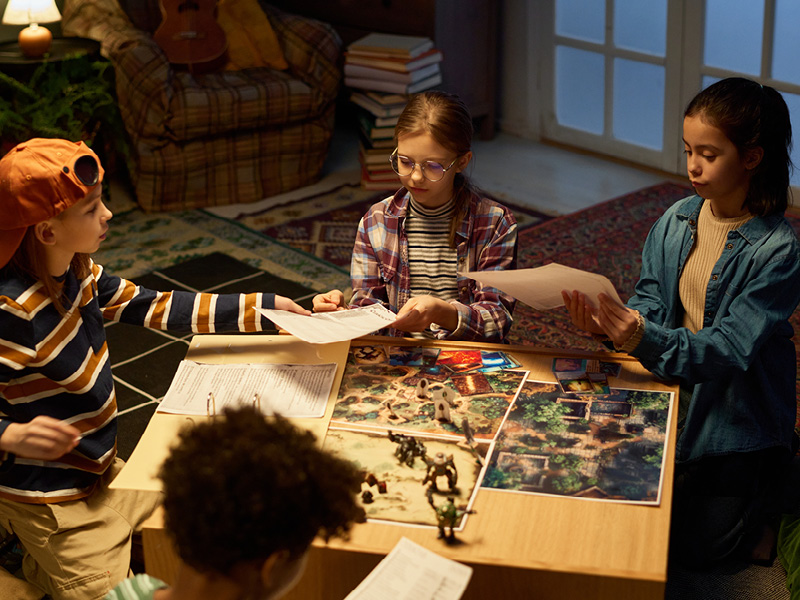
As we look toward the next decade, the pendulum is already swinging. Parents are pushing back against infinite scroll. Schools are banning phones. Kids themselves are gravitating toward analogue experiences—vinyl records, film cameras, board games. There’s a hunger for friction, for limits, for the kind of experiences that can’t be optimized.
Gen Alpha will have something no previous generation has had—a lifetime of data about what growing up in a digital-first world does to humans. They are already making different choices that we can’t predict. They’ll invent new norms, new boundaries, new possibilities.
The need for connection isn’t going away. Content can be part of the solution—creating shared experiences, facilitating real connection, building communities that exist both online and off. But only if we’re intentional about designing for connection rather than just for engagement. Kids are telling us what they need. When you listen to them—really listen—they’re remarkably consistent across decades about what matters: authenticity, representation, stories that “get” them, characters who feel real, worlds where they can see themselves and imagine beyond themselves, and pure joy through laughter.
The opportunity for children’s content in the next decade:
- Lead with these truths in creating content that respects kids’ intelligence and emotional complexity.
- Resist the pressure to optimize for watch time over actual value.
- Remember that the goal isn’t just to capture attention, but to serve development.
Getting it right
Kids are always kids; it’s the childhood that keeps changing. This simple truth contains both the challenge and the opportunity. We can’t stop childhood from evolving, and we shouldn’t try to. Technology will continue to advance, culture will continue to shift, challenges will continue to arise, and kids will continue to adapt in ways we can’t fully predict.
But we can hold onto what we know to be true across all three decades: Kids need to be seen. They need to belong. They need stories that help them make sense of their world. They need adults who understand them without trying to control them. They need space to play, to fail, to figure out who they are.
The content we create matters. It’s not just entertainment; it’s part of the infrastructure of childhood. It shapes how kids understand themselves, their relationships and their possibilities.
Over the last 30 years, Kidscreen has documented this journey—from appointment television to algorithmic feeds; from shared cultural moments to personalized content bubbles; and from childhood as a protected space to childhood as a surveilled performance. The next decade will bring transformations we can’t yet imagine.
But whatever changes, one thing remains—the kids are counting on us to get this right: To create content that serves them, not just our metrics, while keeping in mind that behind every view, every download and every engagement stat is a real child doing the real work of growing up.
That’s the responsibility and the privilege of this industry. That’s what the last 30 years have taught us. And that’s what the next 30 years are depending on us to remember.
Jane Gould is co-founder and partner at wonderworks insights + strategy, a consumer insights and strategy agency specializing in entertainment, media and youth audiences. For three decades, she has been researching what kids wish for and what matters most to them, including stints with The Walt Disney Company and Nickelodeon.
This story originally appeared in Kidscreen‘s Q1 2026 magazine issue.
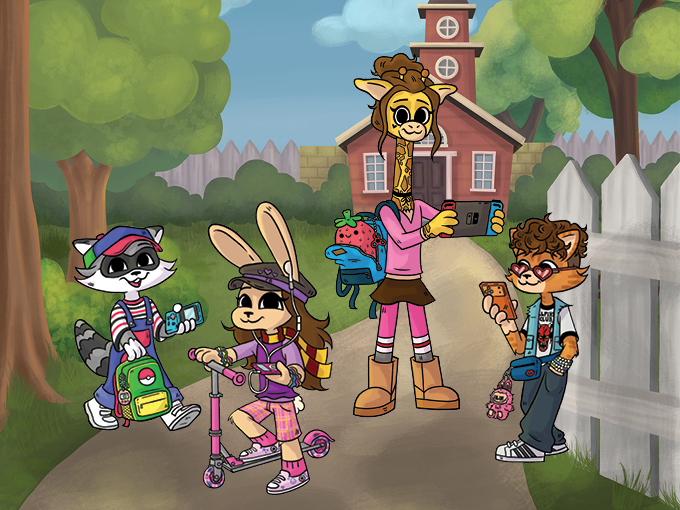
Original featured illustration by Cassandra Kirkwood.




















 Newsletter